You want to sit at camp with the fridge running, a couple of lights on, and the radio going, and then you want the vehicle to start in the morning. That’s a reasonable thing to want. The problem is that one battery can’t safely do both jobs.
The battery in your vehicle is built to do one thing well: deliver a big hit of power to start the engine, then get topped straight back up. Ask it to run a fridge and lights overnight and you’ll drain it down low, over and over, which kills it fast and leaves you stranded.
A dual battery system fixes that by splitting the work. One battery starts the vehicle and is left alone to do its job. A second battery runs all your gear, and can be drained and recharged without putting your start in danger.
Getting that set up properly, the right way for your vehicle and your gear, is what GFM Mechanical & Auto Electrical does. Here’s how it works and what’s worth knowing before you commit.
What a dual battery system actually does
The whole idea is separation. Your starting battery stays dedicated to starting the engine, protected and full. The second battery, often called the auxiliary or house battery, carries everything else.
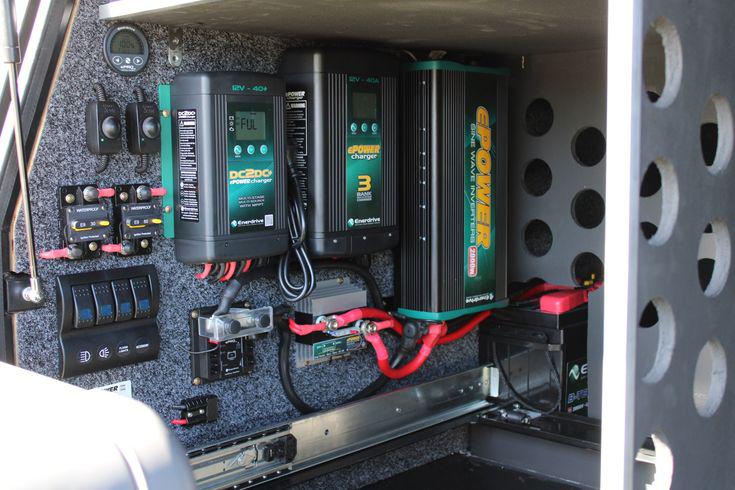
The two are connected through a charging device so the second battery fills back up while you drive, but they’re managed so that running your gear flat never touches your ability to start the vehicle. You can flatten the auxiliary battery at camp, start up the next morning without a worry, and the system tops the second battery back up as you drive to the next spot.
That’s the magic of it. Power for your gear, with your start always safe.
Do you actually need one?
Worth being straight about this, because not everyone does.
If you run a fridge, lights, and gear off-grid for more than a few hours at a time, then yes, a dual battery system is the right answer and probably overdue. If you camp away from power regularly, or your work vehicle runs equipment with the engine off, the same applies.
If you only ever run small things for short stints with the engine running, you might get away with a simpler setup, and we’ll tell you that rather than sell you a full system you don’t need. The honest answer depends on your actual load and how you use the vehicle, which is the first thing we work out.
How the second battery gets charged
This is one of the two big decisions, and it’s where a lot of the difference in performance and price sits.
DC-DC chargers
A DC-DC charger is the modern, do-it-properly option. It takes power from the vehicle and charges the second battery through a proper multi-stage charge, which means the auxiliary battery actually gets full and lasts longer.
It’s the right choice for newer vehicles, which run smart alternators that vary their output and can confuse a simpler setup. It’s also what you want if you’re running a lithium battery, and most DC-DC units can take a solar input as well, so you can top up from a panel at camp. For most builds these days, this is the way to go.
Isolators and VSRs
A voltage-sensitive relay, or isolator, is the simpler, cheaper option. It just connects the two batteries once the starting battery is charged, and disconnects them when it isn’t, so your start is protected.
It works fine on older vehicles with traditional alternators and lighter loads. On a modern vehicle with a smart alternator, or with a lithium battery, it doesn’t charge as well or as fully. It’s not wrong, it’s just the basic version, and we’ll tell you honestly whether it suits your vehicle or whether a DC-DC charger is worth the extra.
AGM or lithium?
The other big decision is the battery itself, and the two common choices each have a place.
AGM is the established, lower-cost option. It’s heavier, it gives you less usable capacity for its size, and it doesn’t love being run right down, but it’s tolerant, it copes with under-bonnet heat, and it does the job well for plenty of setups.
Lithium, specifically the LiFePO4 type, is lighter, gives you far more usable power for its size and weight, and handles many more charge cycles before it wears out. It costs more up front and it needs to be charged correctly, which means a DC-DC charger set to a lithium profile and usually a spot that doesn’t cook it with engine heat. For people running serious loads or doing it for the long haul, it often works out better value over time.
There’s no single right answer. It comes down to your budget, your load, and how long you want it to last. We’ll lay out the trade-offs and let you choose with the full picture.
What a dual battery system will run
The second battery is there to power the gear you’ve added, and it ties your whole build together. Depending on how it’s sized, it’ll comfortably run things like:
- Your fridge, kept cold overnight without touching the start battery.
- A bank of driving lights and camp or work lighting.
- Keeping a UHF radio powered without worrying about flattening anything.
- Running Starlink off-grid so you stay connected well past phone coverage.
- An inverter for mains chargers and tools on a job or at camp.
- USB and accessory points for everything that needs a charge.
Really, the second battery is the gear it needs to power made reliable. Size it to the load and it all just works, for years.
Where it goes and what’s involved
Where the second battery lives depends on the vehicle and the battery type. Some go under the bonnet on a second tray, some go in the tub, the cargo area, or behind a seat, especially lithium, which prefers to stay out of the engine heat.
The install itself is heavy cable run properly from the charging device to the second battery, fused and protected at both ends, with the battery mounted solidly so it doesn’t move on rough roads. Then the system gets tested under load to confirm it charges and holds the way it should.
The most important step happens before any of that: sizing. We work out your actual load and how long you need to run it, then match the battery capacity and the charger to that. A system that’s too small leaves you flat, and one that’s far too big is money wasted. Sized right is the goal.
Who gets a dual battery system fitted
4×4 and touring owners. The core of this work. A fridge, lights, charging, and comms running at camp all need a second battery to do it without stranding you.
Trade and work utes. Vehicles running tools, lighting, and equipment off the vehicle through the day, where a flat start is a lost morning.
Mining and civil fleet. Site vehicles carrying a lot of gear, where beacons, radios, and lighting add up to a load the starting battery shouldn’t be carrying.
Anyone who’s been caught with a flat battery. People who’ve learned the hard way that running gear off the start battery ends one way, and want it done properly.
A few things to work out first
A bit of prep makes for a sharper quote and a better system.
- Have a rough idea of what you want to run and for how long. Fridge, lights, radio, inverter, the lot. That drives the sizing.
- Think about how long you typically camp or work away from charging. A weekend and a week are different jobs.
- Consider whether weight matters to you, since that leans the AGM versus lithium call.
- Let us know what’s already fitted to the vehicle, since it all factors into the load.
You don’t need exact numbers. We’ll work the sizing out properly once we know how you use it.
Dual battery installs across Perth
We’re a mobile auto electrical service across the Perth metro, so we build and test your system where the vehicle is, rather than tying it up at a workshop.
We look after drivers in South Perth and right across the metro, from the southern suburbs through the city to the north. Not sure we cover your area? Just ask when you call.
Why people get us to build their system
A dual battery system is one of those jobs where the planning matters as much as the wiring. Size it wrong or charge it wrong and you’ve spent good money on something that still leaves you flat.
We do a lot of these on 4x4s, work utes, and fleet vehicles, so the sizing, the charging choice, and the heavy cable work are bread and butter. The system comes back fused at both ends, mounted solid, tidy, and tested under load, not a battery in a box wired up with fingers crossed.
We’ll also give you the honest version. The right charger for your alternator, the battery type that suits your budget and your load, and a frank word if a simpler setup would do. If you want a look at the rest of our services, they’re all there, and the dual battery system usually ends up being the backbone the rest of the build runs on.
Frequently asked questions
Do you supply the batteries and charger or do I? You supply the gear. There’s a real range of batteries and chargers out there, and the right ones depend on your vehicle and your load, so we help you choose and then design and install the system around them. Happy to spec out exactly what suits before you buy.
DC-DC charger or a cheaper isolator, which do I need? A DC-DC charger for most modern vehicles, anything with a smart alternator, or any lithium battery, because it charges properly and fully. An isolator can be fine on an older vehicle with a traditional alternator and a lighter load. We’ll tell you straight which suits yours.
AGM or lithium? AGM is cheaper and tolerant but heavier with less usable capacity. Lithium is lighter, gives you far more usable power, and lasts more cycles, but costs more and needs the right charging. It comes down to budget, load, and how long you want it to last.
How big a battery do I need? It depends entirely on what you’re running and for how long. We size it to your actual load rather than guessing, so you’re not left flat and not paying for capacity you’ll never use.
Can I add solar to it? Usually yes. Most DC-DC chargers take a solar input, so you can top the second battery up from a panel at camp. We’ll set it up so it’s ready for solar if that’s part of your plan.
Where will the second battery go? Depends on the vehicle and the battery. Under the bonnet, in the tub, or inside the cargo area. Lithium usually goes somewhere cooler, away from engine heat. We’ll find the spot that suits your setup.
My battery keeps going flat even with my current setup. Can you look at it? Yes. Sometimes the existing system is wired or charging poorly, sometimes there’s a drain somewhere. We can track down a flat-battery problem and sort whether it’s the system or a fault.
Can you build it at the same time as my other gear? Definitely the smart way to do it. Planning the battery system with your lights, fridge, and other gear means the whole load is sized and balanced as one, instead of bolted together piece by piece.
Get your system built properly
A dual battery system is what lets you run your gear without ever worrying about your start. Done right, you forget it’s there. Done badly, it’s a flat battery at the worst time.
Talk it through with us on 0456 311 406, tell us what you want to run and how you use the vehicle, and we’ll size and build a system that just works.