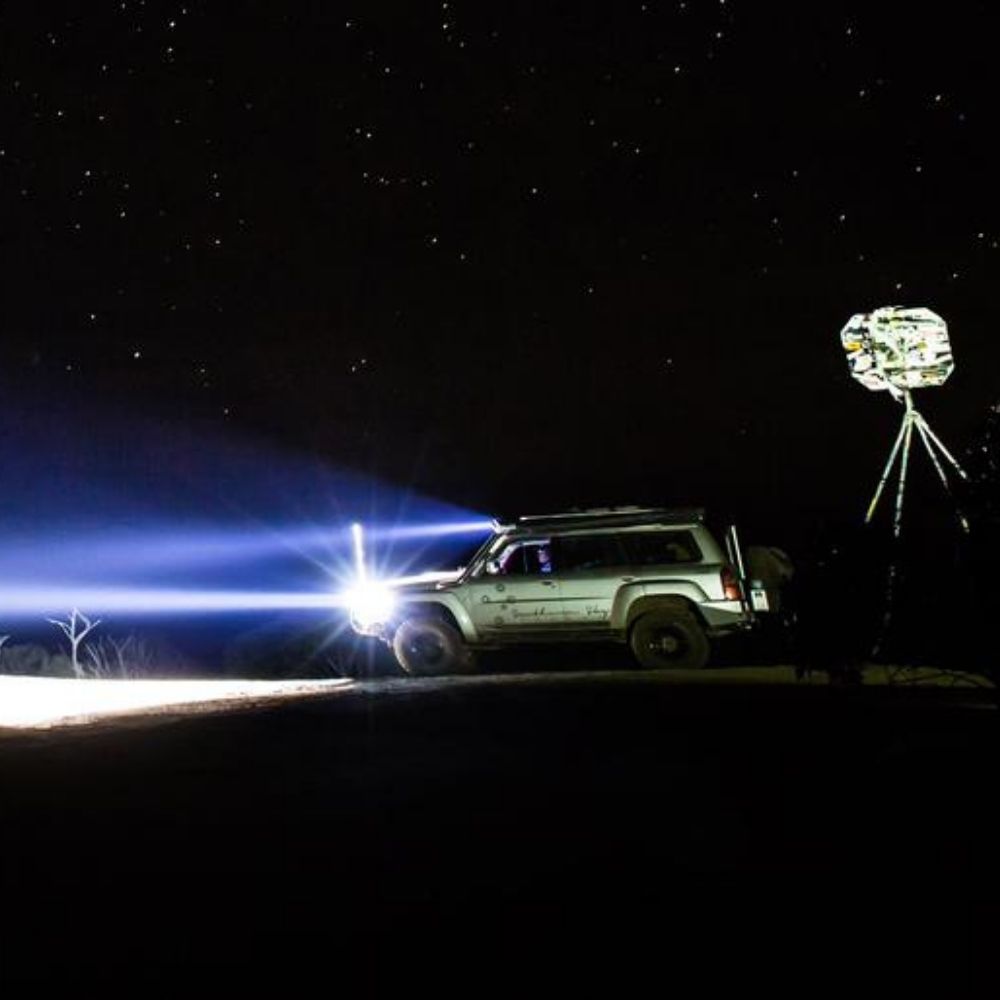
Anyone who’s driven out of Perth at night knows the feeling. The streetlights run out, the road goes black, and your factory headlights suddenly feel like a couple of torches. A roo could be standing on the white line and you wouldn’t see it until it was a problem.
That’s what a proper set of lights fixes. Driving lights, spotlights, or a light bar turn a nervous night drive into a clear one, lighting up the road and the verges far enough ahead that you’ve actually got time to react.
The lights themselves are the easy part. You can buy a good set anywhere. The bit that decides whether they work properly, last, and keep you legal is the wiring, and that’s where it pays to have an auto electrician do it rather than a switch and a roll of cable in the driveway.
Here’s how GFM Mechanical & Auto Electrical approaches it, and what you’ll want to think about.
What proper lighting actually changes
Factory headlights are built to a budget and a beam pattern that suits suburban streets. The moment you’re on a dark country road, or crawling along a track at night, they run out of reach fast.
Auxiliary lights change that in two ways. Distance, so you can see far enough ahead at speed to react to what’s on the road. And spread, so the edges of the road and the verges light up, which is exactly where the roo, the wandering stock, or the unexpected corner tends to be.
For anyone who regularly drives at night outside the city, that’s not a luxury. It’s the difference between seeing the hazard early and meeting it by surprise.
Spotlights, driving lights, or a light bar?
This is the question most people are weighing up, so here’s the plain version of how they differ and what each is good at.
Spotlights and driving lights
These are the round or square lights you mount up front, usually in pairs. The two terms get used loosely, but the idea is the same: a long, focused beam that throws light a long way down the road. Some are built as a tight pencil beam for pure distance, some as a wider spread, and a lot of good setups run one of each to get both.
They’re the classic choice for highway and country driving where you want maximum reach ahead. They look the part, they’re proven, and they’re easy to aim and adjust.
Light bars
A light bar is a single long unit, usually mounted on the bar or the roof. It throws a wide, even wall of light, which is brilliant for slower off-road work where you want the whole scene lit up around you rather than a long thin beam down the track.
Roof-mounted bars give huge spread but can throw glare back off the bonnet, so placement matters. Bar-mounted bars sit lower and cleaner. Plenty of vehicles run both a bar and a set of driving lights for the best of both.
Which is right comes down to how and where you drive. Fast highway and country running leans toward driving lights. Slow technical off-road leans toward a bar. We’ll help you land on the right mix for what you actually do.
Why the wiring is the part that matters
A set of lights wired off a dodgy switch will work for a while. Then the connection corrodes, the fuse blows, the relay fails, or the lights start flickering, and you’re chasing a fault you could have avoided.
Done properly, auxiliary lights run through a relay, so the heavy current goes through proper cable and not through a flimsy dash switch. They’re fused so a fault can’t start a fire. The wiring is sized for the draw, routed away from heat and chafe, and the connections are sealed so they survive water, dust, and vibration.
Big light bars in particular pull serious current. Where you’re running a lot of light, or running it alongside a fridge and other gear, powering them from a second battery keeps the load off your starting battery so you’re never caught out.
We get called out to fix this kind of thing constantly. Lights wired straight to a switch with no relay, pulling their full current through a thin dash wire that was never built for it. It works for a few months, then the switch melts, or the lights start dimming and flickering, or a join with no fuse shorts out and takes other things with it. The lights were fine. The shortcut wiring behind them wasn’t. Done with a relay and proper cable from the start, none of that ever comes up.
It’s not complicated work for someone who does it all the time. It’s just the difference between lights you forget about and lights that become next year’s problem.
Keeping your lights legal on the road
This is the part a lot of cheap installs ignore, and it matters.
Auxiliary driving lights have to be wired so they only come on with high beam, and cut out the moment you dip to low beam. That’s not optional, it’s how they’re allowed to be used on the road, and it’s a standard part of doing the job properly. We wire them exactly that way.
Light bars sit in more of a grey area. Plenty are fitted for off-road use, and depending on how they’re set up they can need covering on the blacktop. The detail varies and the rules get updated over time, so rather than guess, we wire your lights to be compliant and talk you through what applies to the way you’ve set yours up. The goal is lights you can actually use without worrying about a defect notice.
Who gets extra lights fitted
4×4 and touring owners. The biggest group by far. Anyone heading out of town at night or off the bitumen wants light that reaches further than the factory gear.
Country and rural drivers. People who drive unlit roads regularly, where stock, roos, and long dark stretches make good lighting a genuine safety item.
Trade and work vehicles. Work lights and driving lights for crews who start early, finish late, or work off-road sites.
Mining and civil fleet. Work lighting fitted to a standard, often as part of a mine-spec vehicle fit-out where the lights go on with the rest of the safety gear.
How the install goes
We plan it before anything gets mounted or wired.
First we go through the lights you’ve got or want, and how you drive. That decides the right setup and where everything mounts.
Then we mount the lights solidly, where they’ll aim correctly and survive corrugations without shaking loose or cracking a bracket. Aiming matters more than people think. A great light pointed wrong is a wasted light.
It’s a quick step that makes a big difference. Driving lights set a touch too high blind oncoming drivers and get you flashed all night. Set too low and you’re lighting up the bitumen ten metres ahead instead of the distance you actually paid for. We set them so they reach where you need without dazzling anyone, then check them in the dark to be sure they’re throwing light where it counts.
Then we wire them properly. Relay, fuse, correct cable, high-beam trigger, sealed connections, tidy routing. If the lights are going on alongside other gear going on at the same time, we plan it all as one job so the wiring stays clean and the load’s balanced.
Then we test and aim them on the vehicle, so they’re throwing light where you actually need it before you head off.
A few things to work out first
A bit of thought up front makes for a better result.
- Know what lights you’ve got or want. Since you supply the lights, having them sorted keeps things moving, and we’re happy to advise on what suits your driving.
- Have a think about where you mostly drive at night. Fast country roads and slow off-road tracks call for different setups.
- Consider whether you want them on the bar, the roof, or both, and whether there’s anything already mounted there.
- Let us know what else is running off your electrical system, since a big bar adds to the load.
You don’t need it all decided. We’ll sort the rest when we talk.
Lighting installs across Perth
We’re a mobile auto electrical service across the Perth metro, so we fit and aim your lights where the vehicle is, no workshop drop-off needed.
We look after 4×4 owners and work crews right across the metro, including out around Butler and the northern suburbs where a lot of the night and weekend driving heads bush. Not sure we reach you? Just ask when you call.
Why people get us to wire their lights
Bolting a light on is easy. Wiring it so it’s legal, reliable, and tidy is the part worth paying for.
We do a lot of lighting work on 4x4s, work utes, and fleet vehicles, so the relay wiring, the high-beam trigger, and the load management are second nature. The job comes back clean, fused, sealed, and aimed, not a bundle of wire zip-tied behind the grille.
We’ll also tell you straight. If a single pair of driving lights does everything you need, we won’t talk you into a roof bar you’ll never use off-road. If you want a sense of the full range of what we do, it’s all there, and you can see who’s behind the work if you’d like to know who you’re dealing with.
Frequently asked questions
Do you supply the lights or do I? You supply the lights. There’s a huge range out there at every price point, and the right choice depends on how you drive. Our job is mounting, wiring, and aiming them properly. Glad to point you toward what suits before you buy.
Spotlights or a light bar, which should I get? Depends on your driving. Driving lights throw a long beam for fast highway and country running. A light bar gives a wide spread that suits slow off-road work. A lot of people run both. We’ll help you pick based on what you actually do.
Will my lights be legal for the road? We wire driving lights so they only work on high beam and cut out on low beam, which is how they’re meant to be used. Light bars can sit in a grey area depending on setup, so we wire to be compliant and explain what applies to yours.
Will big lights drain my battery? A standard pair of driving lights, not really. A big bar pulling serious current, especially alongside other gear, is where we’d look at running it off a second battery so your starting battery stays protected.
Can you fit lights I already bought? Yes. Where they came from doesn’t matter, as long as they’re decent gear. We’ll mount and wire them the same way regardless.
My existing lights have stopped working. Can you fix them? Yes. It’s often a relay, a fuse, a corroded connection, or a wiring fault rather than the lights themselves. We can work out why they’ve stopped working and sort it.
How long does it take to fit a set of lights? A straightforward pair of driving lights is usually a quick job. A big bar, or lights going on with other gear and a battery setup, takes longer. We’ll give you a realistic time once we know what’s involved.
Get your lights fitted right
Good lights make night driving safer, but only if they’re wired to last and set up to be legal. That’s the part worth getting right.
Get it booked in on 0456 311 406, tell us what you’re driving and where you drive at night, and we’ll fit lights that light up the road and don’t cause you grief down the track.