One light bar is easy. You can probably wire it yourself off a switch and call it a day.
But that’s rarely where it stops. A light bar becomes driving lights, then a fridge, then charging points, then a UHF radio, then a second battery to run it all. Before long your vehicle has more gear hanging off it than it left the factory with, and all of it is sharing the same electrical system that was designed for a stereo and some headlights.
That’s when it stops being a job for a switch and a roll of wire. That’s when it becomes a wiring job, and a wiring job done well is the difference between gear you trust and gear that flattens your battery, blows fuses, or quietly causes a fault six months later.
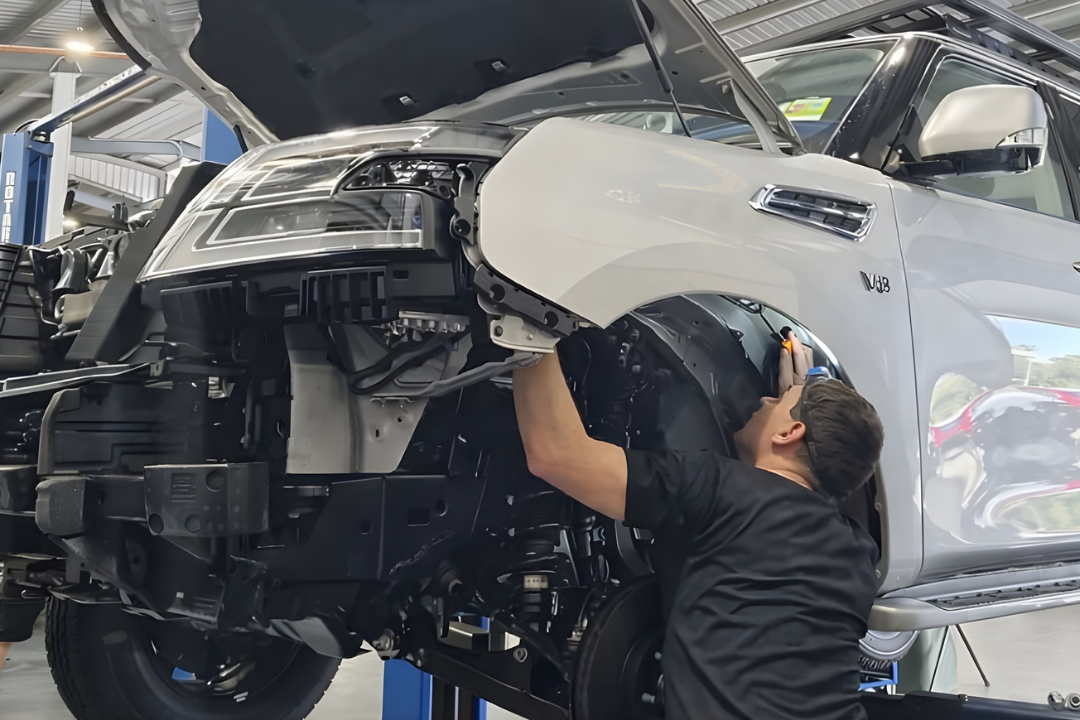
Fitting accessories the right way is what GFM Mechanical & Auto Electrical does day in, day out. Here’s what that actually looks like.
The gear we fit
You buy the gear. We fit it and wire it in properly. Here’s the kind of thing that comes through.
Lighting. Driving lights and light bars, work lights, and the looms and switches to run them cleanly so they don’t backfeed or load up the wrong circuit.
Communications. A UHF two-way radio with the antenna mounted and the power sorted, so it actually transmits when you need it.
Power and batteries. A battery system that can handle the load when you’re running a fridge, lights, and gear off-grid, plus DC-DC chargers, accessory sockets, and USB points wired to draw from the right place.
Fridges and fridge slides. Wired to run without killing your starting battery, which is the whole point of a fridge that’s still cold in the morning.
Inverters. For running mains tools and chargers off the vehicle on a job or a trip, sized and wired to the load.
Winches. Heavy current draw done properly, with the wiring and protection a winch actually needs.
Reverse cameras, switch panels, and 12V gear. The smaller stuff that still has to be wired tidily so it lasts.
Tyre compressors. Wired in so you can air your tyres back up after the sand without running a lead through the window.
If it bolts to a vehicle and needs power, it’s the kind of thing we wire in.
Why the install matters more than the gear
You can spend good money on quality gear and still end up with a setup that’s unreliable. The gear is only half of it. The wiring is the other half, and it’s the half that decides whether the whole thing works in two years or not.
Every accessory you add pulls power, and that power has to come from somewhere, through wiring that’s the right size, protected by the right fuse, drawing from the right part of the system. Get that wrong and the symptoms show up later. A battery that won’t last the night. A fuse that keeps blowing. Lights that dim when the fridge kicks in. A slow drain that leaves you with a flat battery and no idea why.
Done properly, none of that happens. The load is balanced, everything’s fused, the wiring is routed away from heat and chafe, and the gear draws from a source that can actually handle it. You switch it on and it works, every time, and it doesn’t quietly cause problems for the rest of the vehicle.
Here’s a common one. Someone runs a fridge, a light bar, and a compressor, all wired off the main battery through cable that’s too thin for the job. On paper it all works. In practice, every time the fridge compressor kicks in, the lights dim and the voltage sags, and within a season the starting battery is cooked from being run down over and over. The gear was never the problem. The wiring couldn’t carry what was being asked of it. Sized properly and split across the right circuits, with the heavy loads on a battery built for them, the exact same gear runs for years without a hiccup.
That’s the bit you’re really paying for. Not the bolt-on. The fact that it’s wired by someone who knows what the system can take.
Who gets accessories fitted
4×4 and touring owners. The biggest group. Lights, fridge, radio, charging, recovery gear, all added over time as the build comes together.
Trade and work utes. Drawers, lighting, inverters, charging for tools and gear, set up so the ute is a working vehicle and not just transport.
Mining and civil fleet. Vehicles that need gear fitted to a standard, often as part of a full mine-spec fit-out where the accessories and the safety equipment go on together.
Anyone who’s bought good gear and wants it done once. People who’d rather pay to have it wired right than redo it after a DIY attempt didn’t hold up.
The accessory mistakes we get called out to fix
A fair bit of our accessory work is fixing accessory work. Same problems, over and over.
Everything wired to one circuit. Three accessories sharing a feed and a fuse that was never sized for the load. It works until it doesn’t, usually at the worst time.
Scotch locks and twisted joins. The quick connectors that bite into a wire and corrode, or the bare twist-and-tape join that works loose. They cause intermittent faults that are a nightmare to chase later.
Drawing off the starting battery. A fridge or a stack of lights run straight off the battery that’s supposed to start your vehicle. Great until you’re stranded.
No fusing, or fusing in the wrong spot. A fuse protects the wiring from a fire, not just the gear. Skipping it or placing it wrong is the dangerous kind of shortcut.
Earth problems. Half a dozen accessories all earthed to one dodgy point. When that earth goes bad, everything connected to it starts misbehaving at once.
If you’ve already got a setup playing up, we can find out what’s draining your battery or causing the fault, then sort the wiring so it stops happening.
How a typical install goes
We keep it simple and we plan before we cut anything.
First we go through your gear and how you use the vehicle. A weekend tourer and a full-time work ute draw different loads and get set up differently, so this matters.
Then we plan the power. What draws from where, what needs its own circuit, whether the existing battery can carry it or whether you need a second one. This is the step that gets skipped in a rushed job and it’s the step that makes everything else reliable.
Then we fit and wire it. Properly sized cable, fused, routed and protected, and finished so it stays put on rough roads and through years of use.
Then we test it on the vehicle, all of it, under load, so we know it works before you do.We also keep the wiring tidy and labelled, which sounds like a small thing until something needs changing. A loom you can actually follow means the next job, whether that’s adding gear or chasing a fault, takes a fraction of the time. A bird’s nest behind the dash means every future job starts with untangling someone else’s guesswork, and you pay for that time.
If you’re adding more gear down the track, we can set it up so there’s room to grow rather than having to redo it every time.
A few things worth thinking about first
A bit of planning makes the job smoother and the quote sharper.
- Have your gear ready, or know exactly what you’re getting. Since you supply the hardware, sorting that first keeps things moving.
- Think about what else you might add later. It’s cheaper to wire in some headroom now than to redo it when the next bit of gear arrives.
- Tell us everything that’s already running off your electrical system. It all shares the load and it all factors in.
- Decide whether you want anything removable or all permanently mounted. Both are fine, they’re just built differently.
You don’t need it all worked out. We’ll fill the gaps when we talk.
Fitted right, across Perth
We’re a mobile auto electrical service, so we come to you across the Perth metro and fit your gear where the vehicle lives. No dropping it off and waiting around, no workshop queue.
We look after drivers around Joondalup and right across the metro, from the northern suburbs through to the city and out the other side. If you’re not sure we reach your spot, just ask when you call.
Why people get us to fit their gear
There’s no shortage of people who’ll bolt an accessory on. Fewer who’ll wire it like they have to live with it.
We do a lot of work on heavily kitted 4x4s, work utes, and mining and civil vehicles, which means complicated electrical loads are normal for us. We’ve seen what fails and why, so we build it not to. The wiring’s tidy, it’s protected, and it’s labelled and laid out so the next job is easy instead of a mystery.
We also tell you straight. If your existing battery can carry the new gear, we’ll say so and save you the spend. If it can’t, we’ll show you why before you commit. If you want a sense of the other work we do, it’s all there, but the short version is we treat your wiring like it’s ours.
Frequently asked questions
Do you supply the accessories or do I? You supply the gear. You get to choose exactly what you want, and there’s plenty of good gear out there. Our job is fitting it and wiring it in properly so it works and lasts. Happy to point you in the right direction on what suits if you’re unsure.
Can you fit gear I bought online? Yes. Where it came from doesn’t matter, as long as it’s the right gear for what you’re doing. We’ll fit it and wire it the same way regardless.
I started installing it myself and got stuck. Can you finish it? Often, yes, and it’s common. We’ll check what’s been done, sort anything that needs redoing, and finish it properly. Sometimes the half-done wiring needs tidying first, and we’ll be upfront if that’s the case.
Will adding accessories drain my battery? It can, if they’re wired badly or drawing off the wrong battery. Done properly, with the load planned and a second battery where it’s needed, your starting battery stays protected.
Do I need a second battery for my accessories? Depends on the load and how you use the vehicle. A couple of small things, maybe not. A fridge, lights, and gear running off-grid, usually yes. We’ll tell you straight rather than upsell you one you don’t need.
Can you fit everything in one go? Yes, and it’s the smart way to do it. Planning the whole load at once means it’s all balanced and tidy, instead of a patchwork of separate jobs fighting each other for power.
How long does an accessory install take? Depends entirely on how much gear and how involved the wiring is. A single item is quick. A full build with a second battery, lights, fridge, and radio is a bigger job. We’ll give you a realistic time once we know what’s going on.
Can you fit lights and gear without drilling holes all over my vehicle? Where we can use existing mounting points and tidy cable routes, we do. Sometimes a clean, solid install does need a hole drilled, and when it does we seal it properly so it doesn’t rust or leak down the track. The goal is always a finish that looks like it came that way, not a patch job.
Get your gear fitted properly
If you’ve got gear sitting in the garage, or a build you want done right the first time, the wiring is what makes it worth the money.
Book it in on 0456 311 406, tell us what you’ve got and how you use the vehicle, and we’ll wire it in so it just works.