There’s a particular kind of expensive that comes from a vehicle being knocked back at a site gate.
The crew’s ready. The job’s booked. And the ute doesn’t pass the inspection because the beacon’s wrong, the radio isn’t on the right channel, or the isolator isn’t where it’s supposed to be. Now you’re driving back, sorting it, and losing a day you’d already costed into the job.
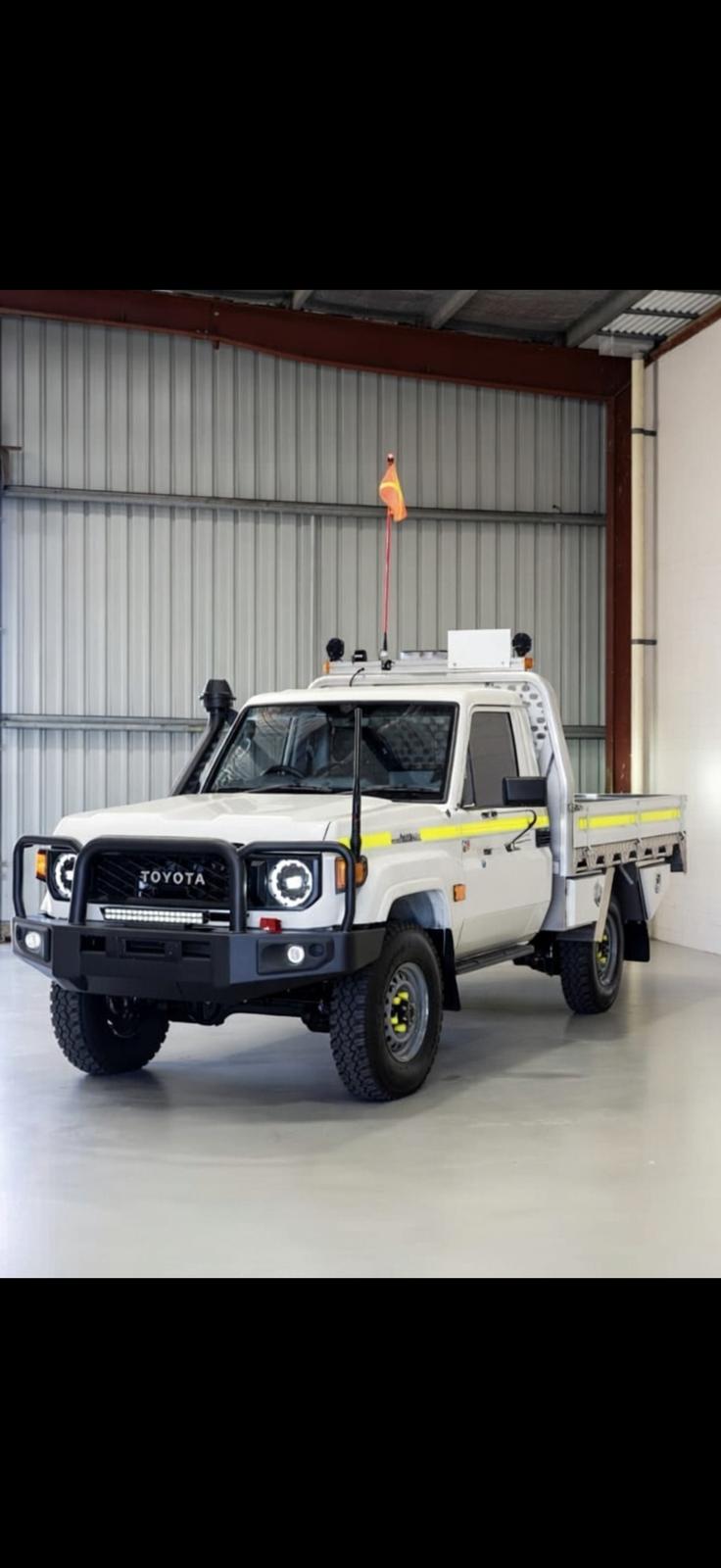
A mine-spec fit-out exists to make sure that doesn’t happen. It’s the work of fitting a light vehicle with the safety equipment a site requires, wired in properly, so it turns up ready to work instead of ready to be sent home.
GFM Mechanical & Auto Electrical does a lot of this for mining and civil crews around Perth, including fleet work for some of the bigger operators. Here’s what’s actually involved and, just as importantly, what we can and can’t promise you.
A vehicle turned away at the gate is a day you don’t get back
Mine sites are dangerous places, and the rules around vehicles exist for good reasons. A light vehicle sharing roads with haul trucks needs to be seen, heard, and shut down safely in an emergency. That’s what the spec is for.
The problem is that the spec isn’t optional and it isn’t forgiving. Either the vehicle meets the site’s requirements or it doesn’t go on. There’s no halfway, no “she’ll be right,” no talking your way past the gate.
So the cost of getting a fit-out wrong isn’t just the redo. It’s the wasted mobilisation, the crew standing around, and the awkward conversation with whoever’s expecting the job done. Getting it right the first time is the entire point.
What a mine-spec fit-out actually involves
A fit-out is a package of safety equipment, most of which has to be wired into the vehicle’s electrical system. The exact list comes from the site, but the gear that turns up on almost every spec looks like this.
Rotating amber beacon or LED warning light. So the vehicle is visible in dust, low light, and around heavy machinery.
High-visibility whip flag. The flexible flag that sticks up high so the vehicle can be seen over crests and through uneven ground. Many now come with an LED for night visibility.
UHF two-way radio. Fixed-mount, programmed to the site’s channels, because phone signal is unreliable on site and radio is how vehicles talk to each other and to site control. We handle UHF radios programmed to your site channels as part of the fit-out.
Battery isolator. An accessible, clearly labelled switch that shuts the vehicle’s electrical system down, which matters for both safety and fire risk.
Reverse alarm. Audible warning when the vehicle’s backing up, so people and machinery nearby know it’s moving.
Work lights and extra lighting. Daytime running lights and dedicated work lighting where the site calls for it.
Wheel nut indicators, fire extinguisher mounts, first aid and spill kit mounting. The bolt-on and bracketed gear that rounds out a compliant vehicle.
Most of that is electrical work. Beacons, radios, isolators, reverse alarms, and lighting all have to be wired in cleanly, fused, and finished so they last in a harsh environment. That’s the part we own.
The part nobody likes to say out loud about compliance
Here’s the honest version, because you deserve it before you book anything.
There is no single mine-spec checklist that works everywhere. Each operator sets its own vehicle standard, and individual sites layer their own requirements on top. BHP’s spec isn’t Rio’s. Rio’s isn’t FMG’s. And they all update their documents, sometimes with little warning.
So we can’t tell you that a fit-out makes your vehicle “compliant for any mine site,” because no honest auto electrician can. What we can do is build your vehicle to the specific spec you give us, fit and wire every piece of safety gear properly, and make sure the electrical side is done right.
What you need to do is confirm the current vehicle requirements for the exact site you’re heading to, before we start, and keep the documentation that site asks for. Things like proof your radio’s programmed to the right channels, your extinguisher tags, your pre-start checklists, and any certificates. We can build the vehicle. The current checklist and the paperwork are yours to confirm, because they change and they’re site by site.
Tell us the site and the spec, and we’ll build to it. That’s the deal, and it’s the deal that keeps you off the wrong end of a gate inspection.
Who needs a mine-spec fit-out
If your vehicle is going on a mine site, it needs one. Beyond that, the people booking these tend to fall into a few groups.
Contractors and subbies. Anyone mobilising their own vehicle to a site for a job, who can’t afford to be turned around.
Owner-operators. People who own the ute and want it set up once, properly, so it’s ready for site work.
Fleet managers. Businesses running multiple vehicles that all need to meet a standard, where consistency across the fleet saves headaches.
Civil and earthworks crews. Not strictly mining, but plenty of civil sites run similar vehicle requirements, especially anything near active operations.
Hire and resale prep. Vehicles being prepared to a known standard before they go out to work.
Why the wiring is where fit-outs go wrong
You can buy every piece of mine-spec gear yourself. Bolting it on is the easy bit. Wiring it in so it works, lasts, and doesn’t cause new problems is where the job is actually won or lost.
A vehicle with a beacon, a radio, an isolator, reverse alarm, and a stack of work lights has a lot more going on electrically than a standard car. Done badly, that’s a recipe for blown fuses, flat batteries, gear that drops out, and electrical faults that pull the vehicle off the job anyway.
Done properly, it’s all fused, routed away from heat and chafe, drawing from the right place, and built to survive dust, heat, and corrugation. There’s also a line you can’t cross, which is fitting gear in a way that compromises the vehicle’s safety systems or its airbags. That’s not just bad practice, it can fail an inspection on its own. We work around those systems, not through them.
A simple example of how this goes wrong. A reverse alarm and a beacon both wired into the same lightly fused circuit, sharing it with the radio. It all worked fine on the day it was fitted. Two weeks of dust and corrugation later, the fuse blows, and now the vehicle has no beacon and no alarm on a live site, which sends it straight off the job until it’s sorted. Spread properly across the right circuits and fused correctly, none of that happens. That’s the difference good wiring makes on a vehicle that gets hammered every shift.
With all that extra gear drawing power, a lot of fit-outs also need a second battery for all the added gear so the starting battery isn’t carrying the load. We sort that as part of the build where it’s needed.
How we approach a fit-out
We keep fit-outs straightforward and we keep you moving.
It starts with your site’s spec. You tell us the operator and site, and what the current vehicle requirements are. Everything we fit is built to that.Then we plan the electrical side properly, because that’s the part that decides whether the vehicle is reliable on site or a constant headache. Where it draws power, how it’s protected, whether it needs a second battery, and how all the gear fits together without overloading anything. That’s also when we sort any extra work lights and the rest of the bolt-on safety gear the spec calls for.
Then we fit and wire it. Beacon, flag, radio, isolator, reverse alarm, lighting, and the bracketed gear, all installed cleanly and finished to last.
Then we test it, all of it, on the vehicle. The radio transmits, the beacon runs, the isolator kills the system the way it should, the alarm sounds. You get the vehicle back ready to present at the gate, not ready to find out at the gate.
If you’re running several vehicles, we can work through them to the same standard so the whole fleet’s consistent.
Keeping a fleet on site, not in the workshop
A fit-out isn’t the end of it. Mine-spec vehicles work hard, and hard work finds electrical faults. Dust gets into connectors, corrugation shakes things loose, and added gear stresses the system.
The same experience that goes into the fit-out goes into keeping it running. When something on a fitted-out vehicle plays up, we can handle diagnosing electrical faults on your fleet and sort it before it costs you a shift. For a fleet, that ongoing support is often worth more than the fit-out itself, because a vehicle off the road is a vehicle not earning.
Built around Perth’s mining and civil corridors
GFM Mechanical & Auto Electrical is a mobile auto electrical service across the Perth metro, which suits fleet and fit-out work, because we can come to where the vehicles are kept rather than having them queue for a workshop bay.
Plenty of this work is for crews based in the outer corridors where mining and civil operators run their gear, including crews based in Ellenbrook and the surrounding growth areas. Wherever your vehicles live, the fit-out is the same job, getting them built to spec and back to work.
Frequently asked questions
Can you guarantee my vehicle will pass the site inspection? We build your vehicle to the spec you give us and wire everything properly. What we can’t do is guarantee a pass, because the final inspection is the site’s call and specs vary by operator and change over time. Confirm the current requirements for your site, and we’ll build to them exactly.
How do I know what my site requires? The operator publishes a vehicle standard or compliance checklist, and the site can give you the current version. Get that document before we start. If you’re unsure, ask your site contact for the latest light vehicle requirements, since an old version can get you knocked back.
How long does a fit-out take? It depends on the spec and how much gear is going on. A standard light vehicle fit-out is usually a manageable turnaround, and we’ll give you a realistic time once we know your site’s requirements. For fleets, we plan it so vehicles aren’t all off the road at once.
Do I supply the gear, or do you? You or your employer supplies the gear that meets your site’s spec. We fit and wire all of it. If you’re not sure exactly what your site needs on the vehicle, tell us the spec and we’ll walk you through what has to go on so you can get it sorted.
Will all this gear flatten my battery? It can, if it’s wired off the starting battery without thought. That’s why we plan the power side properly and fit a second battery where the load calls for it, so the vehicle always starts.
Can you fit out more than one vehicle to the same standard? Yes. Fleet consistency is one of the main reasons businesses book us, so every vehicle meets the same spec and there are no surprises at the gate.
My fitted-out vehicle has developed an electrical fault. Can you sort it? Yes. We diagnose and repair electrical faults on mine-spec and fleet vehicles, which is often more valuable than the fit-out itself, because it keeps the vehicle earning instead of sitting.
Is civil work the same as mine-spec? Often similar, not always identical. Plenty of civil sites run comparable vehicle requirements, especially near active operations. Same approach applies, tell us the site’s spec and we build to it.
Book your fit-out before you mobilise
The worst time to find out a vehicle isn’t up to spec is at the gate. The best time is before it leaves.
If you’ve got a vehicle or a fleet that needs fitting out for site work, book a fit-out on 0456 311 406. Have your site’s current vehicle spec handy, and we’ll build to it properly so your vehicle turns up ready to work. If you want our background working on mining and civil fleet first, that’s there too.