Western Australia is a big place to lose signal in.
Drive a couple of hours in almost any direction out of Perth and your phone becomes a camera. No bars, no maps, no calls. For a lot of people that’s the whole appeal of getting away. For plenty of others, it’s a real problem, because they still need to work, navigate, check in, or keep the family connected while they’re out there.
That’s why Starlink has taken off the way it has, especially for anyone with a 4×4, a touring vehicle, or a work vehicle that spends time past the edge of the network. It puts fast internet almost anywhere you can see the sky.
The catch is that buying the dish is the easy part. Getting it wired into your vehicle so it runs reliably, doesn’t flatten your battery, and survives a corrugated road is where it goes right or wrong. That’s the part GFM Mechanical & Auto Electrical handles.
Where the signal runs out
The Starlink Mini landed in Australia in 2024 and quickly became the go-to for people heading off-grid, because it’s small, it runs on twelve volts, and on a Roam plan it works while you’re moving. There’s a larger standard dish too, but for a vehicle the Mini usually wins. It’s lighter, it draws less power, and it’s far easier to mount where it’ll cop a clear view of the sky without becoming a sail on the roof.
But here’s the thing people learn the hard way. The Mini is built to be flexible, not plug-and-play in a moving vehicle. It’ll happily run off a power point at home. Running it off a vehicle, day after day, on rough roads, in the heat, without killing your starting battery, is a different job. It needs proper power, proper mounting, and a bit of thought about where it’s drawing from.
Get that right and you’ve got reliable internet from the Pilbara to the south coast. Get it wrong and you’ve got a flat battery a hundred kilometres from anywhere, which rather defeats the purpose.
Why the install is the part that matters
The dish doesn’t care how it’s powered. Your vehicle does.
A Starlink Mini draws a steady amount of power whenever it’s on, and “whenever it’s on” can mean all day if you’re working remotely. Run that straight off your starting battery and you risk not being able to start the vehicle. Run it through a cheap setup with thin wiring over a long run, and voltage drop means the dish doesn’t get clean power, drops out, or won’t run at all.
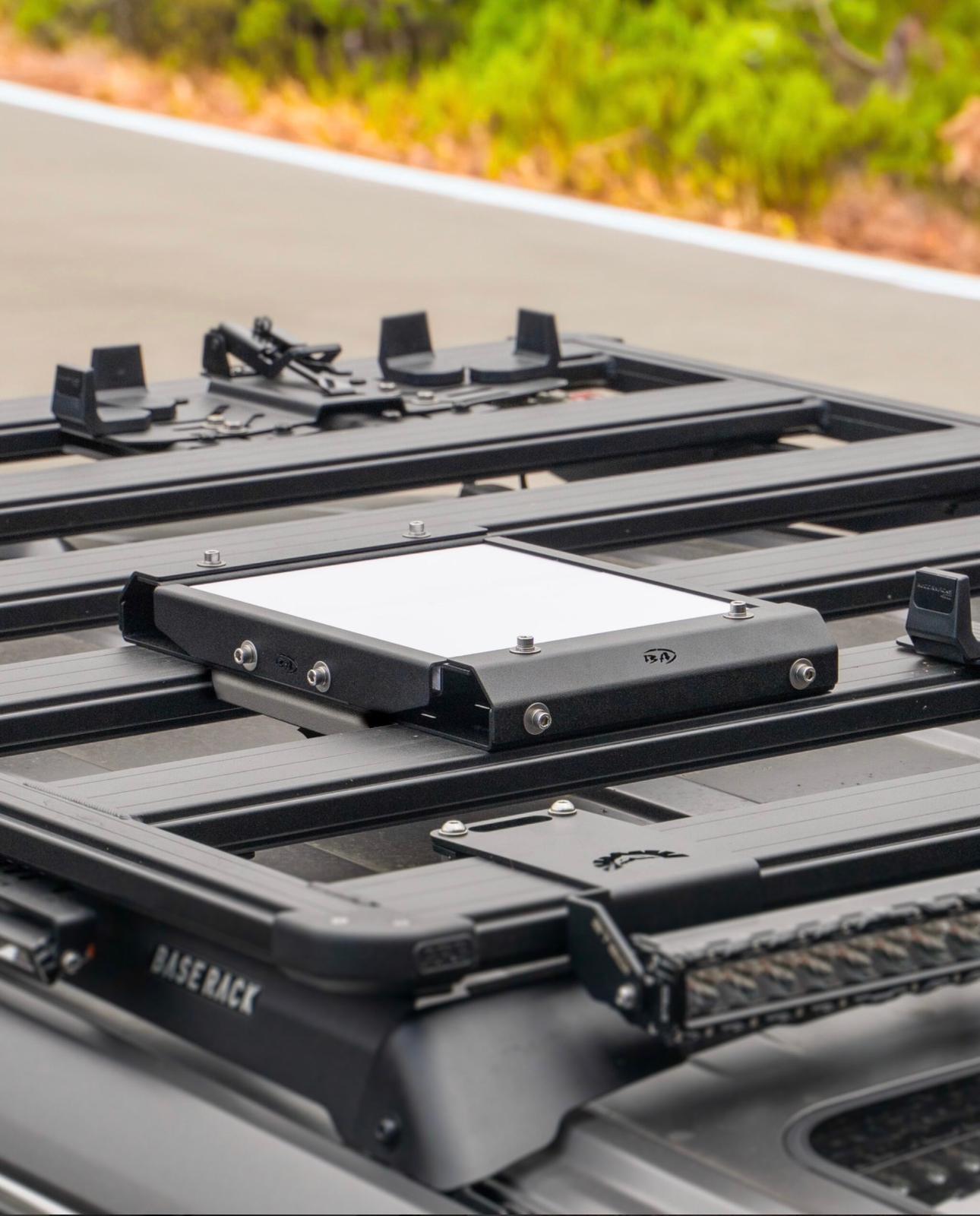
Then there’s the mounting. A dish bolted on poorly becomes a rattle, a leak, or a casualty of the first decent corrugation. On a 4×4 that sees real off-road use, mounting is not a five minute job with a couple of self-tappers.
So the real work is electrical. Wiring the dish into a stable power source, sizing the cable for the run so voltage stays where it needs to be, protecting the circuit properly, and making sure it isn’t fighting the rest of your vehicle’s electronics. That’s auto electrical work, and it’s what separates a setup that just works from one you’re constantly babying.
What a proper vehicle Starlink install includes
You supply the Starlink. Our job is fitting it so you can forget about it. Switch it on, it works, it doesn’t cause problems anywhere else. Here’s what that involves.
Power done right. We wire the dish into a stable source, most often a second battery rather than your starting battery, so you’re never stuck. The Mini runs on DC, so there’s no need for a clunky inverter, which keeps the whole thing efficient and tidy.
Cable sized for the run. Long power runs lose voltage. We size the cable so the dish gets the voltage it actually needs, which is the difference between a reliable connection and one that randomly drops.
Clean, protected wiring. Fused, routed away from heat and chafe points, and finished so it doesn’t become next year’s electrical fault.
Solid mounting. Mounted where it gets a clear view of the sky and where it’ll survive the way you actually use the vehicle, whether that’s highway driving or proper off-road.
Tested in place. We don’t hand it back until it’s powered up, connected, and behaving on your vehicle, not just in theory.
If your dish is going into a setup that already has a fridge, lights, and other gear running off the same system, we make sure Starlink fits into that load without overloading anything. Speaking of which, if you want other gear fitted to your 4×4 at the same time, it’s worth doing it all in one go.
Who’s getting Starlink fitted to their vehicle
This isn’t just a niche thing anymore. The range of people getting it installed has widened a lot.
Remote workers and FIFO. People who need to actually work from camp, a remote site, or the road, where the job doesn’t stop just because the coverage did.
Long-distance and outback travellers. Anyone heading deep into the state on extended trips who wants streaming, video calls, and proper internet at camp instead of hunting for a signal.
4×4 and touring owners. People heading well past the network who want navigation, communication, and a safety link when they’re a long way from help.
Businesses and fleets. Contractors and operators who need connectivity on remote job sites. If your vehicles are also vehicles built for mine sites, connectivity often gets sorted as part of the same fit-out.
Anyone working land out past coverage. Farms, stations, and properties where the vehicle is the office and the office needs internet.
Doing it yourself versus getting it wired in
Plenty of people do install their own Starlink, and for a simple setup, that can be fine.
Where it goes sideways is the power. The most common problems we see are a dish wired straight to a starting battery that then goes flat, cable runs too thin for the distance so the dish never gets enough voltage, and mounting that doesn’t survive real use. There’s also a quieter issue, where a poorly set up dish can push electrical noise back into the vehicle and upset other electronics.
None of that is dramatic on its own. Add it up and it’s the difference between gear you trust on a long trip and gear you’re nervous about the moment you leave the bitumen.
A common one we get called out to fix is the dish that worked perfectly in the driveway and then started dropping out once the trip started. Nine times out of ten it isn’t the dish. It’s the power. The cable run from the battery to wherever the dish sits was too thin for the distance, so by the time the power reached the dish it had sagged below what the dish wants to see. At home, on a short run, that was fine. On a vehicle, over a longer run, it wasn’t. The fix is rarely new hardware. It’s wiring it the way a vehicle needs, not the way a power point at home lets you get away with.
If you’re confident with auto electrics and your setup is simple, by all means give it a go. If it’s going into a 4×4 you rely on, or a work vehicle that can’t afford to be down, getting it wired in properly is cheap insurance.
What the install looks like start to finish
We keep it simple and we keep you in the loop.
First we talk through how you use the vehicle and what you’re running off it already. A weekender’s setup and a full-time remote worker’s setup are not the same job, and the power side depends entirely on that.
Then we plan the power. Where it draws from, how it’s protected, and how it fits with anything else on your system. If you need a second battery to do it properly, we’ll tell you, and we can sort that by wiring it into a dual battery system at the same time so it’s all done once.
Then we mount the dish where it gets clear sky and stays put, run and protect the cable, and wire it in.
Last, we test the whole thing on your vehicle until it’s connected and stable. Then we walk you through how it runs so you’re not guessing later.
A few things worth sorting before the install
A bit of prep makes the job smoother and the quote more accurate.
- Know which Starlink you’ve got or want. The Mini suits most vehicles, and since you supply the hardware, sorting that first keeps things moving.
- Have a think about how you use the vehicle. Weekend trips and full-time off-grid work need different power setups.
- Tell us what’s already running off your electrical system. Fridge, lights, compressor, radio. It all shares the load.
- Let us know if you want it permanently mounted or set up so it can come off easily. Both are fine, they’re just built differently.
You don’t need answers to all of it. We’ll work through the rest when we talk.
Set up for the way Perth drivers actually travel
GFM Mechanical & Auto Electrical is a mobile auto electrical service covering the Perth metro, which suits this kind of work, because we can fit the vehicle out where it lives rather than tying up a workshop bay.
A lot of this work is for people heading north and inland, away from the coverage that hugs the coast and the city. We help plenty of people heading out from Clarkson and the northern corridor, through Currambine, and out around Two Rocks where the open country starts. Wherever you’re pointing the bullbar when you leave, the install is about making sure you stay connected once the bars disappear.
Frequently asked questions
Do you supply the Starlink, or do I? You supply the hardware. The plan is tied to your own account and the dish is a straightforward purchase, so it makes sense for you to own it. Our job is the install, getting it wired, powered, and mounted on your vehicle so it actually works on the road.
Will running Starlink flatten my battery? Not if it’s set up right. The usual fix is to run it off a second battery rather than your starting battery, so you’re never stuck. That’s a big part of why a proper install matters.
Can it work while I’m driving? On a Roam plan, yes. It supports in-motion use at normal road speeds, which is fine for any vehicle on any Australian road. The dish needs a clear view of the sky to stay connected, so heavy tree cover or tunnels will interrupt it.
Do I need an inverter to run it? No. The Mini runs on DC power, so it wires straight into your twelve volt system without an inverter. That keeps the setup simpler and more efficient.
Will it interfere with my other electronics? It can if it’s installed poorly, since the dish can push electrical noise back down the power line. Done properly, with the right wiring and filtering where needed, it stays out of the way of everything else.
Can you mount it permanently on my 4×4? Yes. We can mount it solidly for permanent use, or set it up so it comes off easily when you don’t need it. It depends how you travel, and we’ll build it to suit.
I’ve already installed mine and it keeps dropping out. Can you fix it? Usually, yes. Drop-outs are often a power or cable problem rather than a dish problem. We can track down an electrical fault in an existing setup and sort the wiring so it runs the way it should.
Get it wired to run anywhere
Buying Starlink is the easy decision. The part that decides whether it actually works out there is the install, and that’s auto electrical work.
If you want it wired in properly, powered so it won’t leave you stranded, and mounted to survive the way you travel, get in touch on 0456 311 406. Tell us about your vehicle and how you use it, and we’ll set it up to run anywhere you take it. It’s also worth a look at everything else we handle if you’re getting more than one thing done.